
Pixel Games | Play Free Online Games
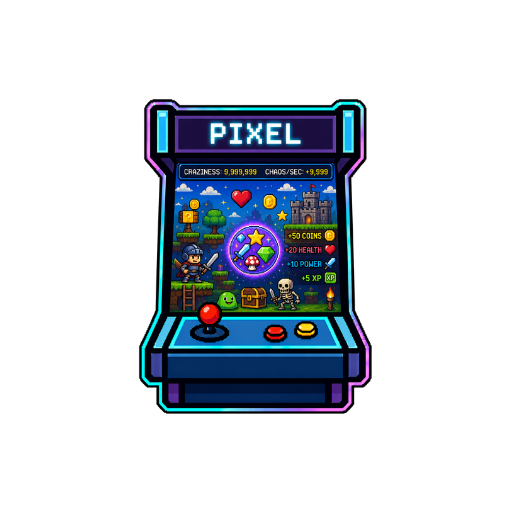
Pixel Games: Small Squares, Infinite Worlds
There is something immediately recognizable about a pixel. That small, square unit of color — visible, deliberate, irreducible — carries with it the entire history of gaming in a single glance. It reminds us where we came from. It reminds us of the first time a screen came alive with something we could control, of the wonder that came from a world built from blocks of color that somehow suggested forests and dungeons and space and adventure. Pixel art is gaming's oldest visual language. And far from fading as technology has advanced, it has grown richer, more expressive, and more loved with every passing year.
At WikiGames.io, the Pixel Games tag is a celebration of that language in all its forms — from the authentic 8-bit and 16-bit classics that established the aesthetic to the modern indie masterpieces using pixel art as a deliberate creative choice rather than a technical constraint. This is your complete guide to the games that prove, definitively, that visual simplicity and artistic depth are not opposites — they are the same thing wearing different clothes.
What Are Pixel Games?
Pixel games are games that use pixel art — a visual style in which images are constructed from individually visible square pixels, typically at low resolutions that make each pixel a deliberate design element rather than an imperceptible component of a larger image. The style has its roots in the technical limitations of early gaming hardware, when low resolution and limited color palettes were the only options available. What began as a constraint became a craft — and eventually, an art form with its own vocabulary, its own masters, and its own devoted global audience.
Modern pixel games are not constrained by the hardware limitations that produced the style. Today's pixel art games are a conscious aesthetic choice — developers who could build in any visual style choosing pixel art because of what it communicates, what it evokes, and what it allows them to do with limited teams and budgets that would be impossible in higher-fidelity styles. The result is a genre that combines nostalgic resonance with genuine artistic innovation in a way no other visual style in gaming can match.
The qualities that define great pixel game design:
- Deliberate artistic vision — every pixel placed with intention, creating images that communicate mood, character, and world with extraordinary economy of means
- Nostalgic resonance with contemporary depth — the visual language of classic gaming married to modern design sensibilities, narrative ambition, and mechanical sophistication
- Character through constraint — pixel art forces clarity and creativity simultaneously, producing visual identities more distinctive and memorable than many photorealistic titles
- Timeless aesthetic appeal — a pixel art game from 1994 and a pixel art game from 2024 can sit side by side without either looking dated, because the style exists outside the technology arms race
- Accessibility for independent developers — pixel art has democratized game development, enabling small teams and solo creators to produce visually compelling games without AAA budgets
Pixel games also carry an emotional weight that higher-fidelity styles often struggle to match. The brain fills in the gaps that pixel art deliberately leaves — projecting detail, personality, and feeling onto simplified forms in a way that creates a uniquely personal relationship between player and game world. When you love a pixel art character, you love the idea of them as much as the image. That is a form of connection no amount of polygon count can manufacture.
A Visual Legacy Built One Pixel at a Time
The story of pixel games is the story of gaming itself. Space Invaders, Pac-Man, and Donkey Kong built their iconic visual identities from a handful of pixels and a few colors — and produced images so distinctive that they remain instantly recognizable more than four decades later. The NES and Game Boy era produced a visual grammar so widely understood that it became the universal shorthand for gaming itself. Super Mario Bros., The Legend of Zelda, and Mega Man are as much visual achievements as they are design ones.
The 16-bit era elevated pixel art to its first golden age. Super Metroid, Chrono Trigger, Street Fighter II, and Castlevania: Symphony of the Night pushed the style to levels of expressiveness and beauty that still astonish players encountering them for the first time today. The sprite work of this era represents some of the finest visual design in gaming history — achieved under technical constraints that make its accomplishments all the more remarkable.
Then came the indie renaissance — and pixel art found its second life. Cave Story proved that a single developer with pixel art tools could create a game that competed with major studio productions on every level. Terraria built an infinite procedural world in pixel art and sold tens of millions of copies. Shovel Knight used the NES aesthetic as a foundation for design innovation that genuinely advanced the platformer genre. Undertale used deliberately simple pixel art to tell one of gaming's most emotionally complex stories. Celeste turned pixel art precision platforming into a meditation on mental health that won Game of the Year awards worldwide.
Why Pixel Art Has Never Been More Alive
In an industry that often measures progress in polygon counts and ray-traced reflections, pixel games represent something genuinely countercultural — the insistence that artistic intention matters more than technical specification, that a well-placed pixel communicates more than a photorealistic texture, and that the most powerful visual tool in game development is the creative vision of the person holding the pen tool, not the processing power of the hardware rendering the output.
The modern pixel art scene is one of gaming's most vibrant creative communities. Tools like Aseprite have made pixel art creation accessible to an entire generation of independent developers. Platforms like itch.io have given pixel art games a home and an audience outside the mainstream storefronts. Communities of artists, developers, and players have formed around the style with a passion and a creative output that rivals any genre or visual tradition in gaming.
Pixel games are also among the most consistently high-quality experiences in modern gaming. Because they are almost always made by small teams or individual creators who chose the style deliberately, pixel art games tend to reflect a singular creative vision with an intensity that larger productions rarely achieve. When a pixel game is great, it is great in a way that feels personal — like it could only have been made by exactly the people who made it.
Pixel art did not survive the transition to modern gaming. It thrived. And the best pixel games being made today are among the finest games being made, full stop.
What You'll Find in the Pixel Games Tag on WikiGames.io
Retro Classics & Historical Coverage
Complete documentation of the 8-bit and 16-bit eras — the games that established pixel art as gaming's foundational visual language, covered with the historical context, technical appreciation, and genuine enthusiasm they deserve.
Modern Indie Pixel Art Spotlights
The contemporary pixel art masterpieces that have redefined what the style can achieve — reviewed, analyzed, and recommended with the depth that games of this quality deserve and too rarely receive from mainstream coverage.
Pixel Art Genre Guides
The best pixel games across every major genre — platformers, RPGs, action games, puzzle titles, and more — organized and documented to help every type of player find the pixel art experience that speaks most directly to what they love about gaming.
Developer & Artist Spotlights
The creators behind the genre's greatest works — their tools, their techniques, their creative philosophies, and the stories behind the games they made — documented with the respect that artists of this caliber deserve.
Hidden Gems & Overlooked Masterpieces
The pixel art games that deserved far more attention than they received — surfaced from the depths of itch.io, Steam, and gaming history and recommended for every player willing to look beyond the obvious choices for their next extraordinary experience.
See the World in Pixels at WikiGames.io
Every pixel is a decision. Every sprite is a statement. Every pixel art world is built from thousands of individual creative choices made by artists who understood that constraint is not the enemy of expression — it is its most demanding and most rewarding teacher. The Pixel Games tag at WikiGames.io is where every lover of the style — the nostalgic veteran, the indie discoverer, the pixel art newcomer — finds the games worth playing, the history worth knowing, and the artists worth celebrating.
Small squares. Infinite worlds. Start exploring.